Home / Journal / The Evening Hour
A Simple Night Routine for People With No Time
Most people who search for a night routine already know what one looks like. Lower the lights and put the phone down. The trouble is not knowing what to do. It is reaching the end of the evening with no time left to do it.
In this piece
So this is the short version. Three steps that cost no time at all, then a routine that fits in five minutes, and two longer versions that each add one thing. If you have the full hour, our what to do before bed timetable is the better plan. This page is for the nights you do not.
The steps that cost no time
These come first because they are free. None of them adds a minute to your evening. They replace something you were going to do anyway.
Keep the same wake time. The American Academy of Sleep Medicine's advice is to get up at the same time every day, even on weekends or holidays. It is a decision you make once, and it sets the clock everything else runs on. On a short night, keep the alarm where it is rather than sleeping in to make up for it.
Lamps on, overheads off. Flicking a different switch takes no longer than the one you use now. In a 2011 study of 116 healthy adults aged 18 to 30, ordinary room light below 200 lux in the hours before bed delayed the start of melatonin in 99 percent of participants and shortened the night's melatonin by about 90 minutes, compared with dim light. That was young adults living in a research unit, so it does not tell you how much sleep you would gain at home. It does tell you that ordinary room light is not neutral, and the AASM likewise advises limiting bright light in the evening.
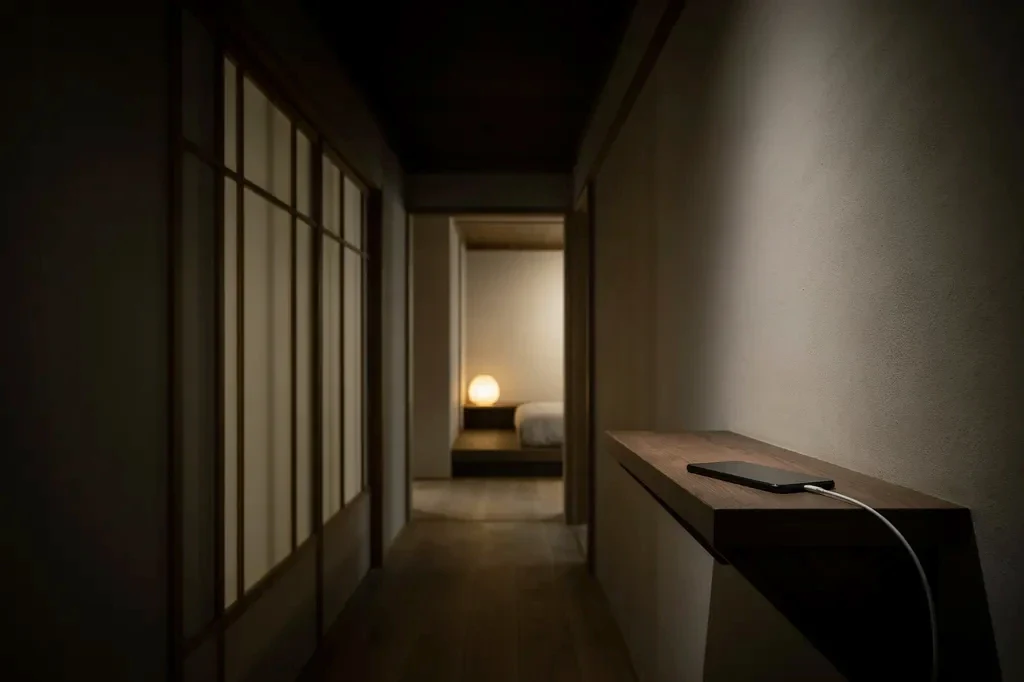
Phone parked outside the bedroom. The AASM suggests turning off electronic devices at least 30 minutes before bed. The simplest way to do that is to charge the phone somewhere you cannot reach from the pillow. The research on phones and sleep is more mixed than the headlines, and our guide to putting the phone away before bed goes through it. The case for this step is mainly that it costs nothing and ends the scroll in bed.
The 5-minute routine
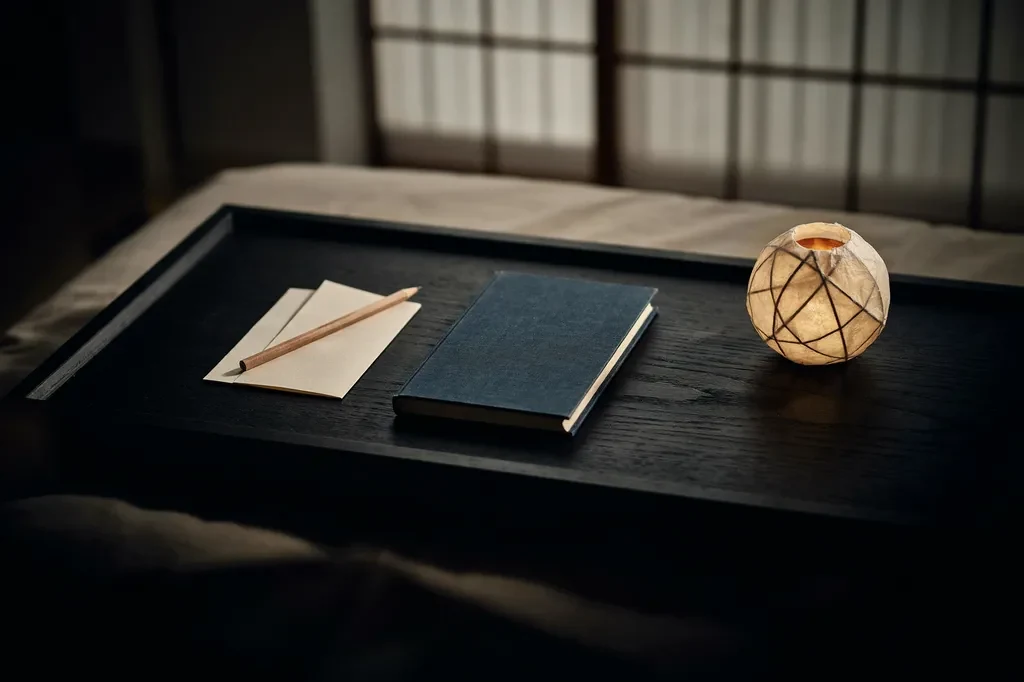
The three free steps, plus one thing: write a to-do list for tomorrow.
Give it five minutes on paper and make each item as specific as you can. This is the best-supported step on the page for the time it takes. In a single study published in 2018, 57 healthy adults aged 18 to 30 spent five minutes writing before a night in a sleep lab. Half wrote a to-do list for the next few days, half wrote about tasks they had already finished. The to-do group fell asleep faster, about nine minutes faster on average according to the university's report, and the more specific the list, the faster they fell asleep.
Nine minutes is a modest gain, measured on one night in young people without sleep problems, and against another writing task rather than against nothing. Still, I would keep this one on almost any night. It takes tomorrow out of your head and puts it somewhere you can find it in the morning.
The 10-minute routine
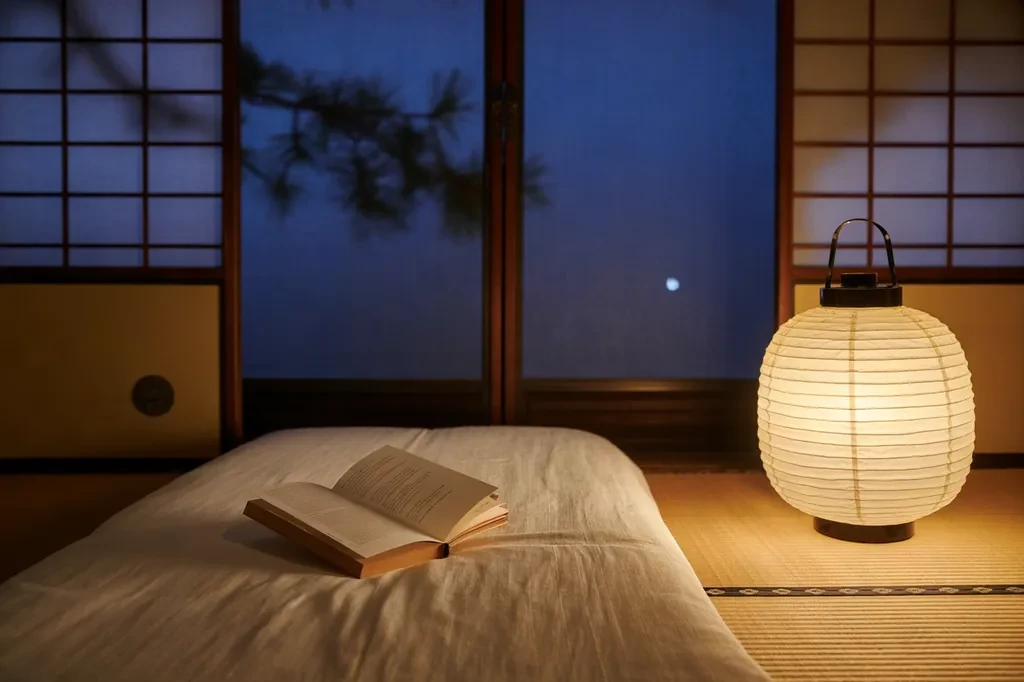
Everything above, plus five minutes of reading something slow under a lamp.
Choose a book that is easy to put down: essays, poetry, something you have read before. Read on paper or a dim e-ink reader rather than the phone you just parked. The point is to give the evening something quiet to finish on, so you are not lying down straight from the list. Our guide to books to read before bed has suggestions.
The 20-minute routine
Everything above, plus a warm shower, if you can take it earlier.
This is the step where timing matters more than length. A 2019 meta-analysis found that a warm shower or bath at 40 to 42.5°C (104 to 108.5°F), for as little as 10 minutes, helped people fall asleep faster when it was taken one to two hours before bed. The effect depends on the body shedding heat afterwards, and that takes time. A shower straight before lights-out has not had that time.
So if your 20 minutes can be split, take the shower when you get in or after dinner, and do the rest at bedtime. Our warm bath before bed guide covers why the gap matters. If all 20 minutes fall right before bed, skip the shower and read for longer instead. Ten more minutes of a slow book is the better use of that time.
What to drop first on a bad night
When the evening runs over, cut from the top of the list and keep the bottom:
- The shower goes first. It needs the most time and has to happen earliest.
- The reading goes next.
- The to-do list stays as long as you have five minutes.
- The three free steps never go. They cost nothing, so there is nothing to save by dropping them.
The routines at a glance
| Tier | Steps | Minutes | Dial it turns |
|---|---|---|---|
| Every night | Same wake time, lamps not overheads, phone parked | 0 | Anchor (timing), light, attention |
| 5-minute | Plus a specific to-do list for tomorrow | 5 | Attention |
| 10-minute | Plus five minutes of slow reading | 10 | Attention |
| 20-minute | Plus a warm shower an hour or more before bed, or ten more minutes of reading | 20 | Warmth (or attention) |
The dials are the three things an evening routine changes, light, warmth and attention, which our night routine guide explains in full. If you would like your steps on paper, the printable checklist has blank rows for your own.
Frequently asked questions
What is a simple night routine? A few steps you can repeat on any evening, however late. Keep the same wake time, swap overhead lights for lamps, park the phone outside the bedroom, and if you have five minutes, write a to-do list for tomorrow.
How do I make a quick bedtime routine? Start with the steps that cost no time, then add one step for each extra five minutes you have. Keep the same order every night so it stops being a decision.
What is the minimum night routine that helps sleep? The three free steps plus a five-minute to-do list. In one small lab study, writing a specific to-do list helped young adults fall asleep faster than writing about finished tasks.
Is it worth showering right before bed? For sleep, a warm shower one to two hours before bed has the better evidence. Straight before bed, the body has not had time to cool down, so reading is a better use of those minutes.
What are some simple night routine ideas for busy evenings? Lamps instead of overheads, the phone charging in another room, a short list for tomorrow and a few pages of a slow book.
The bottom line
A night routine does not need an hour to be worth doing. Three steps cost nothing and belong in every evening: a fixed wake time, lower light and the phone out of reach. Five minutes buys a to-do list, ten buys a little reading, and twenty buys a warm shower if you can take it early. On a bad night, cut from the top and keep the free steps.
Sources
Retrieved November 2026.
- American Academy of Sleep Medicine. Healthy Sleep Habits. sleepeducation.org
- Gooley JJ, Chamberlain K, Smith KA, Khalsa SBS, Rajaratnam SMW, Van Reen E, Zeitzer JM, Czeisler CA, Lockley SW. Exposure to room light before bedtime suppresses melatonin onset and shortens melatonin duration in humans. J Clin Endocrinol Metab. 2011;96(3):E463-E472. doi:10.1210/jc.2010-2098 (abstract)
- Duraccio KM, Zaugg KK, Blackburn RC, Jensen CD. Does iPhone night shift mitigate negative effects of smartphone use on sleep outcomes in emerging adults? Sleep Health. 2021;7(4):478-484. doi:10.1016/j.sleh.2021.03.005 (abstract; background for the phone section, detail in the linked guide)
- Scullin MK, Krueger ML, Ballard HK, Pruett N, Bliwise DL. The effects of bedtime writing on difficulty falling asleep: a polysomnographic study comparing to-do lists and completed activity lists. J Exp Psychol Gen. 2018;147(1):139-146. doi:10.1037/xge0000374 (abstract)
- Baylor University. Trouble falling asleep? Baylor prof's research identifies a simple trick that can help. 2018. baylor.edu (secondary reporting of source 4, used for the nine-minute figure)
- Haghayegh S, Khoshnevis S, Smolensky MH, Diller KR, Castriotta RJ. Before-bedtime passive body heating by warm shower or bath to improve sleep: a systematic review and meta-analysis. Sleep Med Rev. 2019;46:124-135. doi:10.1016/j.smrv.2019.04.008 (abstract)
Educational only. This article is not medical advice, and nothing in it is a substitute for talking to a clinician about your own sleep.