Home / Journal / Natural Aids
Best Sleep Masks for Side Sleepers: Blackout Without the Pressure
A sleep mask has one job, and side sleepers ask it to do that job while being pressed into a pillow all night. That's where most masks fail. The bulky contoured ones dig into your temple. The thin silky ones ride up your forehead by 2 AM. The cheap ones do both, in sequence.
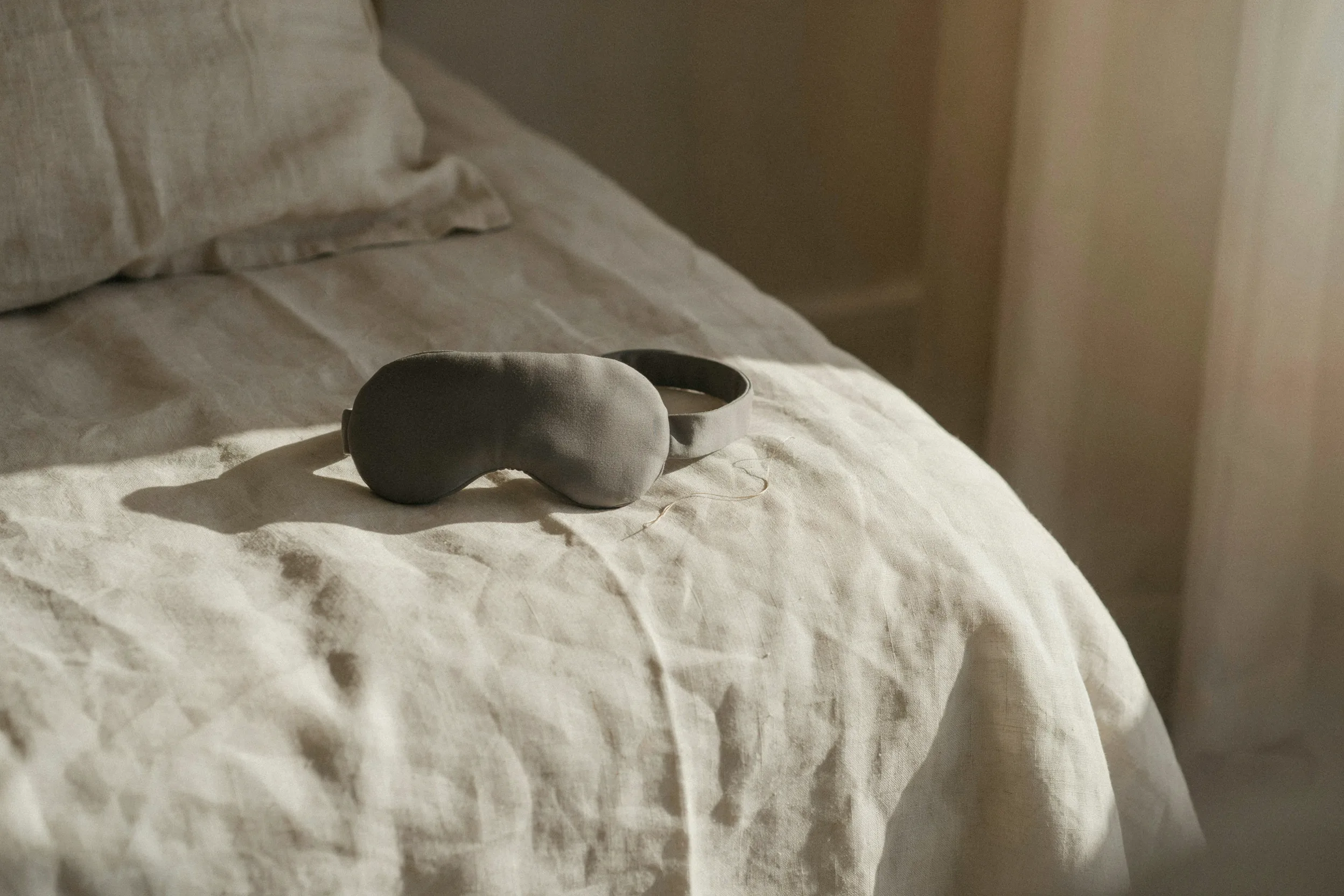
Darkness is worth fighting for. Light reaching your closed eyes is still read by the brain as a signal that the night isn't settled, which is exactly the message you don't want delivered at 3 AM. A mask that stays sealed through a position change is the cheapest blackout solution there is, cheaper than curtains, and it travels.
Some links below are affiliate links. If you buy through one we earn a small commission, at no extra cost to you. It doesn't change what we recommend.
Here's what actually matters when your face spends the night sideways, and five masks worth the money.
What matters for side sleepers
Four things, learned the hard way by everyone who's bought the wrong mask first:
- Profile against the pillow. The mask's outer surface gets compressed all night. Deep rigid cups can become pressure points at the temple. The best contoured designs keep the depth on the inside, facing your eyes, not the outside, facing the pillow.
- Eye clearance. A mask that presses on your eyelids gets removed in your sleep, by you, without consultation. Contoured cavities that let your eyes and lashes move freely are the single biggest comfort upgrade over a flat mask.
- Strap security. Position changes are what dislodge masks. Adjustable straps that sit low on the head hold better than a single elastic band, and any strap with an exposed closure will eventually find your hair.
- Material against the skin. Your cheek, the mask edge, and the pillowcase spend hours pressed together. Foam breathes differently than silk, silk differently than cotton, and warm sleepers feel the difference by morning.
The picks
Best adjustable fit: Manta Sleep Mask
Manta's signature is modular eye cups that detach and reposition on the mask's surface, so the blackout seal is placed around your eye spacing rather than an average face's. Eye pressure is effectively zero, and the strap is wide, low-profile, and genuinely adjustable. The tradeoff is bulk: the cups add depth, so it suits side sleepers on softer pillows best, and Manta sells side-sleep-specific variants with slimmer cups if the standard mask fights your pillow.
Best overall contour: Nidra Deep Rest
The molded-cup mask that's been a fixture of mainstream product testing for years. Its cups are deep on the inside and comparatively flat on the outside, which is precisely the geometry a side sleeper wants, and it's light enough to forget. The fit runs generic since nothing repositions, so faces far from the average may find a light leak at the nose.
Best budget contour: MZOO Sleep Mask
The proof that contoured comfort doesn't require a premium price. Molded memory-foam cups, decent blackout, and a low enough cost that buying one as an experiment is painless. Expect the foam to soften and the seal to loosen with time. At this price, replacing it yearly is part of the deal.
Best for hot sleepers: Alaska Bear Natural Silk
A classic flat mask in natural mulberry silk, cool against the skin in a way foam never manages, and the gentlest thing you can put between your face and a pillowcase. The tradeoffs are the flat design's usual ones: light contact with lashes and lids, and a single strap that can migrate on restless nights. For sleepers who run warm and find cups claustrophobic, the tradeoffs are worth it.
Best for travel and sensitive skin: Mavogel Cotton Sleep Mask
Soft cotton, an adjustable nose area that closes the leak most flat masks have, and a weight so slight it disappears into any bag. Cotton suits skin that reacts to synthetics, and the mask washes without drama. It's the least engineered pick here, and for naps, flights, and guest beds, that's the point.
Getting the fit right
Whatever you buy, spend one minute on setup most people skip. Adjust the strap while lying on your side, not standing at the mirror, since the pillow changes everything. Snug enough to seal, never tight enough to feel your pulse. If you wake with the mask on your forehead, tighten half a step or lower the strap toward the base of your skull. And wash it. A mask lives against your eyes every night and earns laundering more than almost anything you own.
FAQ
Do sleep masks actually improve sleep, or just feel nice?
Darkness is one of the strongest signals the circadian system gets, and a mask delivers it regardless of what your bedroom, hotel, or day-sleeping schedule allows. For shift workers and travelers especially, it's the highest-value item in the kit.
Contoured or flat: which is better for side sleeping?
Contoured, for most people, because eye pressure is what makes masks intolerable over a full night. The exceptions are hot sleepers and anyone who finds cups confining, which is what the silk pick is for.
How long does a mask last?
Foam-cup masks soften over months of nightly compression; silk and cotton last longer but lose elastic before they lose fabric. When the blackout seal goes, so does the benefit. Treat masks as a consumable, not an heirloom.
The bottom line
Buy for the pillow, not the mirror. A side sleeper's mask succeeds by what it doesn't do: doesn't press, doesn't dig, doesn't wander. Pick the geometry that matches how you actually sleep, fit it lying down, and let the dark do the rest. The night was always willing; it just needed the door closed.
Educational only, not medical advice.
Some links on the guides we point you to may be affiliate links; if you buy through one, Cricket & Moon may earn a small commission at no extra cost to you.