Home / Journal / Natural Aids
Chamomile Tea Before Bed: How Long Before Sleep Should You Drink It?
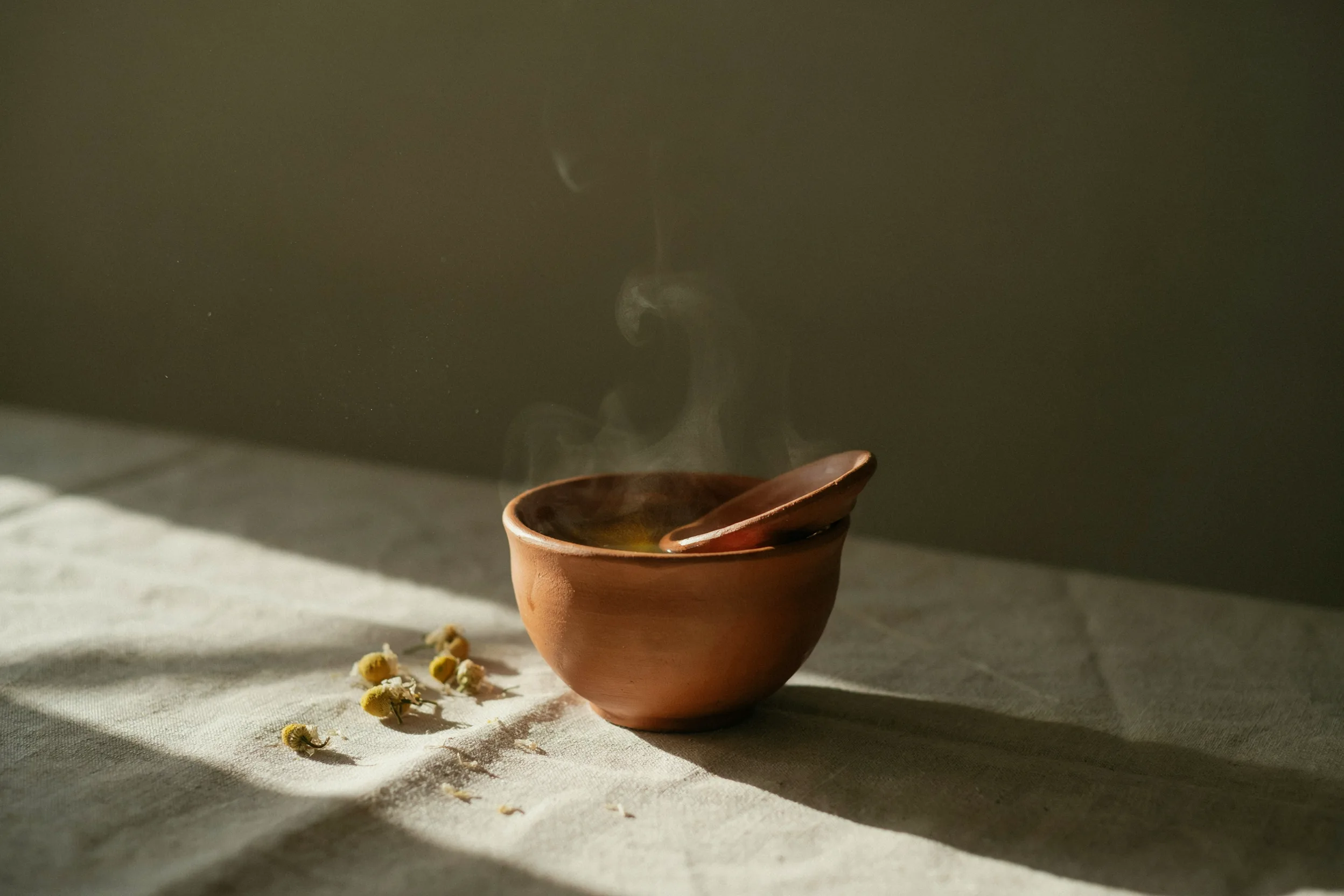
The kettle is its own kind of clock. Somewhere between filling it and the first sip, the day starts loosening its grip, and by the bottom of the cup the house feels quieter than it did. People have been ending days this way for a very long time. Chamomile's use as an evening herb runs back through centuries of folk practice, long before anyone could say what was in it.
Now we can say. And the timing question, it turns out, has a practical answer even though science has never formally asked it.
Some links below are affiliate links. If you buy through one we earn a small commission, at no extra cost to you. It doesn't change what we recommend.
The short answer: 45 minutes to an hour before bed
No clinical trial has tested chamomile's timing directly, so the window comes from how the tea actually behaves in a body:
- The warmth needs time to work. A hot drink raises your skin temperature briefly. As that warmth radiates away, core temperature eases downward, and a falling core temperature is one of sleep's oldest invitations. That arc takes the better part of an hour.
- Your bladder gets a vote. A cup at lights-out is a 2 AM appointment. Drinking it an hour early, and keeping it to one cup, lets the fluid clear before you lie down.
- The ritual is half the dose. Forty-five minutes gives the brewing, the holding, the sipping room to function as a genuine wind-down, the signal to your nervous system that nothing more will be asked of it tonight.
What's actually in the cup
Chamomile's best-studied calming compound is apigenin, a flavonoid that binds, weakly, to the same receptor site that prescription sedatives act on. The binding is faint, which is exactly why chamomile settles rather than sedates. The flower is only about 0.5 to 1 percent apigenin by weight, so a cup delivers a whisper of it, alongside dozens of other plant compounds that may share the work.
The research matches the whisper. Trials of chamomile extract have found modest improvements: better daytime functioning in adults with insomnia in one randomized trial, better reported sleep quality in a trial of elderly participants. Nothing dramatic, and the studies used concentrated extracts rather than tea. What the evidence supports is what tradition always claimed, a gentle nudge toward ease, not a knockout.
Brewing a cup that earns its reputation
Most chamomile disappoints because it's brewed like an afterthought. The Wirecutter version of the instructions:
- Use enough flower. One to two teaspoons of dried chamomile, or two tea bags if that's what's in the cupboard.
- Water just off the boil, poured over, not simmered.
- Steep 5 to 10 minutes, covered. The cover matters; chamomile's aromatic oils escape with the steam, and a saucer over the cup keeps them in the water where they belong.
- One cup, not three. More tea means more 2 AM, not more sleep.
Two cautions worth taking seriously
If you take warfarin or any other blood thinner, talk to your pharmacist before making chamomile a nightly habit. Chamomile appears in clinical reviews of herbs with meaningful anticoagulant interactions, and a cup every evening is precisely the steady, repeated exposure that matters. This is a five-minute conversation, and it's worth having before the habit forms rather than after.
If ragweed makes you miserable, chamomile might too. They share a plant family, and the allergy can cross over.
And if you're pregnant or nursing, ask before making it routine. The evening cup is common, but "common" and "studied" aren't the same word.
FAQ
Can I drink chamomile every night?
For most healthy adults, a nightly cup is fine and the consistency likely helps, since ritual compounds over time. The medication caution above is the exception that matters.
Does chamomile tea work the first night?
Sometimes, though what works first is usually the warmth and the pause rather than the apigenin. The gentler herbal effects, such as they are, favor regular use over single cups.
Is stronger tea better?
Longer steeping and covered brewing, yes. Doubling the cups, no. You'll trade the gain for a bathroom trip.
The bottom line
Pour it about an hour before bed, steep it covered and unhurried, and let the cup do what cups have always done. The apigenin is real and the research is modestly kind, but chamomile's oldest ingredient is the one no extract captures: ten minutes at the end of the day in which nothing is required of you. The flower is small. The pause is not.
Sources
The trial findings and the anticoagulant caution on this page trace back to these.
- Zick SM, Wright BD, Sen A, Arnedt JT. "Preliminary examination of the efficacy and safety of a standardized chamomile extract for chronic primary insomnia: a randomized placebo-controlled pilot study." BMC Complementary and Alternative Medicine 11:78 (2011). Read it
- Adib-Hajbaghery M, Mousavi SN. "The effects of chamomile extract on sleep quality among elderly people: A clinical trial." Complementary Therapies in Medicine (2017). Read it
- Ge B, Zhang Z, Zuo Z. "Updates on the Clinical Evidenced Herb–Warfarin Interactions." Evidence-Based Complementary and Alternative Medicine (2014). Read it
- National Center for Complementary and Integrative Health. "Chamomile: Usefulness and Safety." Read it
Educational only, not medical advice. If sleep loss is affecting your health or safety, speak with a clinician.
Some links on the guides we point you to may be affiliate links; if you buy through one, Cricket & Moon may earn a small commission at no extra cost to you.